
I built one place for everything my business knows.
Atlas: the facts every product business keeps scattered across folders, inboxes and portals, pulled into one place that answers back. I built it for my own company.
business
record
range, tracked
The barcode sits in one system, the stock in another, the compliance date in an inbox, the sales in a portal, and the one number you actually want is in none of them.
Every product business lives like this. Pulling it together is the job nobody has time for, so it never gets done.
So I built the place it all comes together.
Atlas is a single operational system that sits over every source my business already uses and keeps one honest record for each product. Not a chatbot, and not another dashboard to feed by hand, but a real application that reads from the lot and gives me a straight answer. I built it myself, for Format Games, and it's the same kind of system I put into a business.
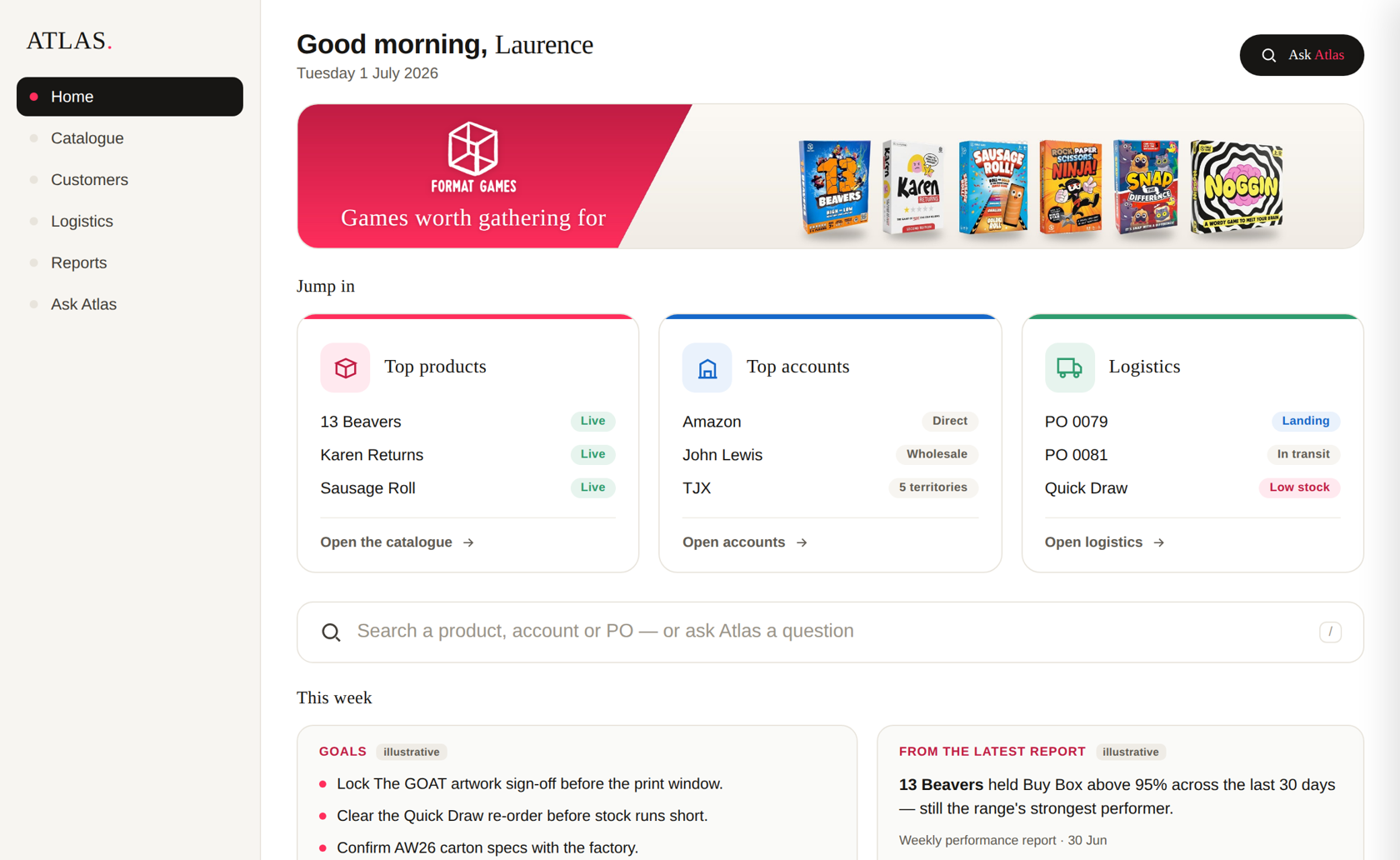
The whole business, one front door.
Products, accounts, shipments, the week's jobs, all on one page that reads from the real sources. No more hunting across systems for the thing you half-remember.
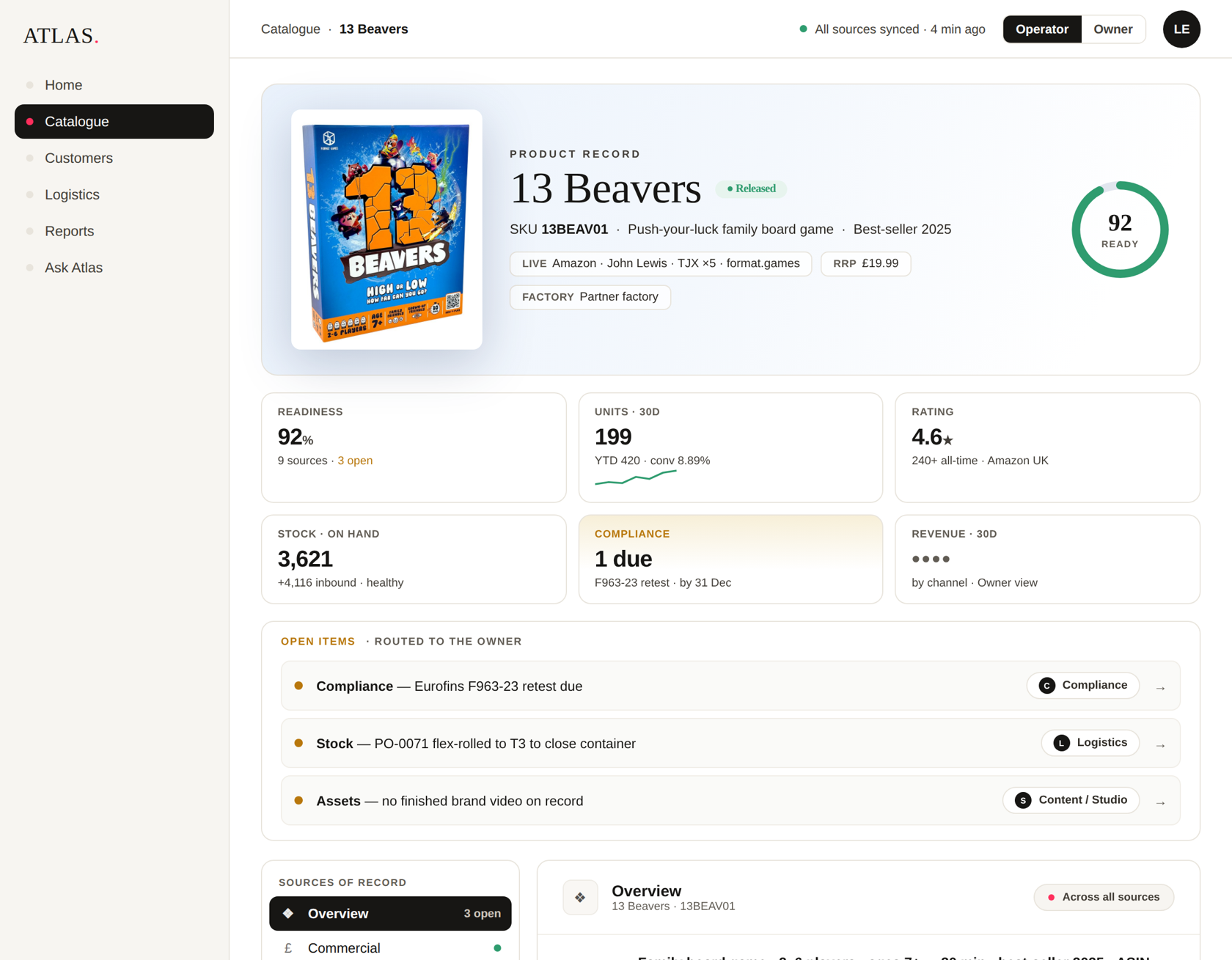
Every source on one record, tagged where it came from.
Open a product and Atlas gathers its nine sources into a single record, each one marked with where it's read from. Anything wrong, a due retest, low cover, a missing asset, becomes an open item routed to whoever owns it, not dropped on you. And the finance is role-gated: switch to the operator view and the money simply isn't there.
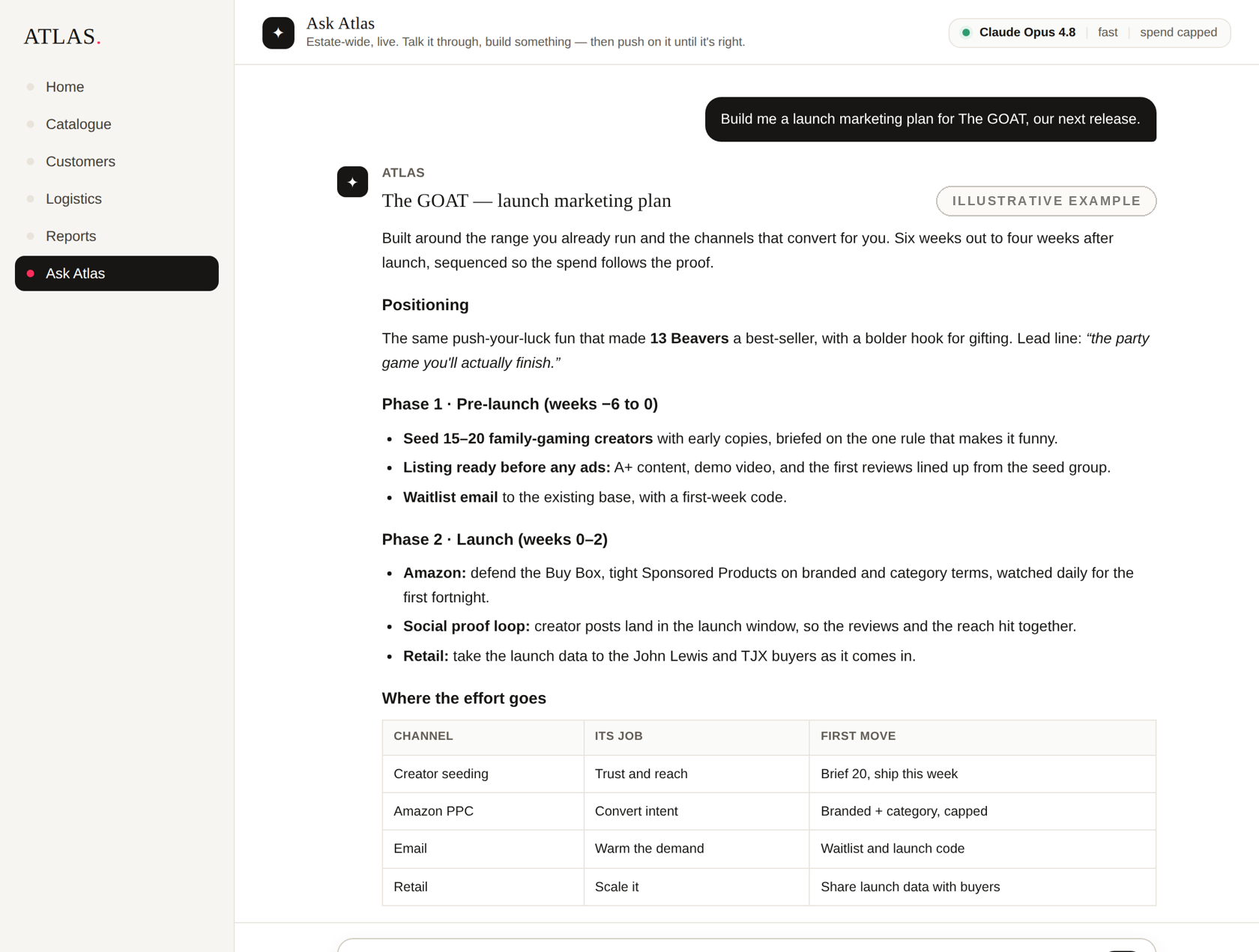
It doesn't just hold the data. It thinks with it.
Ask Atlas a real question and it works from the actual files, then names them. Ask it to build something, a stock plan, a launch plan, a reply to a buyer, and it does, in my voice. You push back and it reworks it, like a colleague. When it doesn't know, it says so. It never guesses.
Built by one operator, the way I'd build yours.
I started by mapping every place a fact about a product lived: the systems, the inboxes, the portals. Then I built one record that reads from each of them, tagged so you always know the source. Then I put an agent over the top, so instead of digging you just ask.
No dev team, no year-long project, no six-figure software bill. I built it myself, over time, alongside everything else. It's the same method I bring to yours.
What changes when it's your business.
Your team stops hunting across systems and reconciling exports, and those hours go back to the work that grows the business. Nothing slips, because every problem is sent to the person who owns it instead of sitting in an inbox. You decide from live data, not last month's spreadsheet.
And because the finance is role-gated, you can put it in front of the whole team without putting your margins on show.
The difference between a chatbot and a system.
A chatbot answers questions. Atlas holds the whole business, reads from every source, sends what's wrong to the right person, and answers back from the real files. I built it on my own company's data. Yours is what I put in for you.